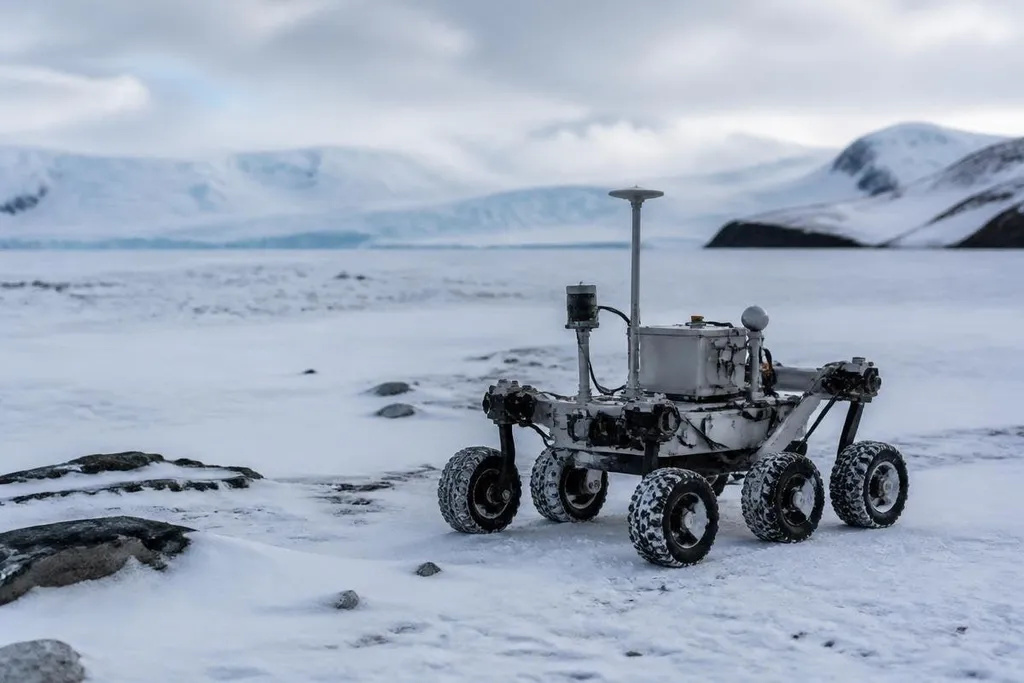
Any robot in Antarctica has to keep working when ice, wind, darkness, and distance remove easy ways to fix a problem. That makes the first question practical: can the robot collect useful data for long enough to justify sending it there?
Quick read
- Cold affects batteries, motors, seals, and sensors.
- Remote robots need clear recovery plans before they leave base.
- The best system may combine an autonomous robot with human control.
What Antarctic robots would need to handle
The robot would need a body that keeps water and ice away from its electronics. Its joints would need seals, its cables would need protection, and its outer surfaces would need to avoid places where snow can collect and freeze.
Cold also changes how batteries work. A design that runs well in a workshop may lose runtime outside, where low temperatures slow chemical reactions inside the battery. Engineers would need to test the full system in cold conditions, not only place a battery in a freezer and record one number.
Movement creates another problem. Wheels may work on a prepared track but slip on loose snow. Legs can step over uneven ground, yet each leg adds motors, sensors, and points that can fail. A tracked base may spread its weight over a larger area, but it can still lose traction on hard ice or soft drifts.
The choice depends on the job. A small aerial robot could inspect an area from above, while a ground robot could take close measurements. A fixed sensor station may be the better answer when the task needs long observation and no movement.
Autonomy has to fail safely
Antarctica can place a robot far from its operator. Radio contact may drop behind terrain, and a storm can prevent a person from reaching the machine. The robot therefore needs a clear response when its map, battery estimate, or position becomes uncertain.
That response might mean stopping, returning along a known route, or moving to a marked safe point. The choice has to match the machine and the site. A rover near a research base can follow a different plan from a vehicle working far across the ice.
Autonomy does not remove the need for people. It changes the work they do. An operator may review sensor readings, approve a route, or take control during a difficult section instead of steering every metre.
That division of labor makes the test record matter. A report from Robot 24 can place an Antarctic robot’s route, sensor readings, and operator role beside the result, so you can tell a field trial from a short lab demonstration. The next question is what data the robot gathers and how people can use it.
The data matters more than the machine
Its value in Antarctica comes from the data it brings back. The system may measure ice movement, air conditions, surface shape, or changes around a research site. Each task needs a sensor plan, a storage plan, and a way to check the readings later.
A camera can show a scene, but images alone may not answer the research question. A temperature sensor needs a known range and a record of when each reading was taken. A map made from several sensors needs enough position data to show where each measurement belongs.
The robot also has to protect the data before it returns. Local storage can hold readings during a lost connection, while a lower-rate link may send small status updates.
If the machine stops, the team still needs to know its last position, battery state, and reason for stopping. The hard part is not making the robot move across snow. It is proving that the readings remain useful after the robot has spent time in cold, wind, ice, and weak communication conditions.
A buying guide for future missions
Before choosing a robot for Antarctic work, check these points:
- Name the task: Write down the measurement, distance, and time needed.
- Test the cold case: Run the complete robot in the expected temperature range.
- Plan recovery: Set rules for lost contact, low battery, and blocked routes.
- Protect the record: Store raw sensor data with time and position details.
- Set a human role: Decide when an operator reviews, approves, or takes control.
- Measure the result: Compare the robot’s data with a known reference method.
That list also gives teams a way to reject a poor fit before transport and setup consume time. A robot with a shorter range may still work if the task stays near base, while a longer-range system needs more careful recovery and data plans.
What comes next
The next useful step is a field test that publishes the conditions, runtime, route, sensor readings, and failures. Without those details, a smooth video says little about Antarctic work.
My view is plain: the first successful Antarctic robots will be slow, repairable systems with narrow jobs, not machines built to do everything. The measure that matters will be useful data returned after a full season of cold, distance, and missed signals.